Skip to content

Not just oil

monticchio-1
basilicata

Discovering Basilicata: The Monticchio Lakes

adminpace

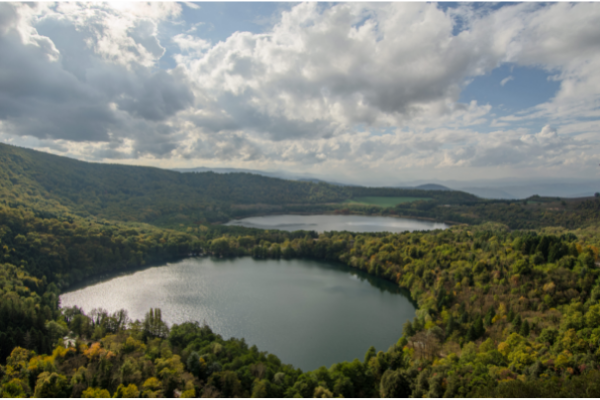
The Monticchio Lakes are located between the municipalities of Atella and Rionero in Vulture, in the province of Potenza . The two bodies of water, one larger and the other smaller, originated in the crater of Mount Vulture , a now extinct volcano, within a pristine natural area rich in numerous species of fauna, birds, and plants. Beech, holm oak, Turkey oak, alder, poplar, and conifer trees grow near the two lakes; wolves, badgers, wild boars, porcupines, foxes, and hedgehogs, as well as dormice, weasels, martens, skunks, black squirrels, dormice, and otters, inhabit the mountains; perch, trout, and vulture bleak swim in the waters. The Lakes of Monticchio The two lakes are both elliptical in shape and separated by a 215-meter-wide strip of land. Lago Piccolo has a perimeter of 1,800 meters, steep shores, and a depth of up to 38 meters. Lago Grande has a perimeter of 2,200 meters and a funnel-shaped cavity with extensive shallows. Only in its northern part does it reach a depth of 36 meters. The higher Lago Piccolo (658 metres), is fed by underwater springs and in turn feeds the Lago Grande (656 metres high) via a small stream. Historically, the Monticchio Lakes were initially a place of recreation for Emperor Frederick II of Swabia , who loved to try his hand at falconry in this area as well as in Melfi, Lagopesole and Palazzo San Gervasio; and subsequently a place of refuge for the brigand lieutenant Carmine Crocco together with his subordinates Ninco Nanco, Giuseppe Caruso and Giovanni Coppa. Abbey of St. Michael the Archangel Built on the part of the crater overlooking Lake Piccolo, the Abbey of San Michele Arcangelo is a religious building dating back to the 8th century AD and built around a cave inhabited by Basilian monks: it passed first to the Benedictines, then to the Capuchins and finally to the Constantinian military order. The entire complex consists of a convent, an 18th-century church, and the chapel of San Michele. The Grotta dell'Angelo, dedicated to San Michele, adorned with frescoes dating back to the mid-11th century, was the place where the Italo-Greek monks who once inhabited the area gathered to pray. From here, you can admire the evocative panorama of the Monticchio Lakes . Between the two lakes it is also possible to visit the remains of the Abbey of Sant'Ippolito , a structure dating back to the 11th century and destroyed by the earthquake of 1456. Natural History Museum of Vulture The Vulture Natural History Museum was inaugurated in 2008 and is located on the first two floors of the Abbey of San Michele. It presents a “double identity”: a more traditional one, referring to classical museography , with a conservative and scientific function; and a more contemporary one, with the aim of educating visitors through interaction and entertainment. The museum also offers visitors an authentic interpretation of the history of Vulture : the itineraries, in fact, are built on the history of the volcano throughout its 750,000 years, offering the public a journey back in time. It begins with an evocative depiction of man's recent journey in Vulture, moving on to the history of the animals and plants present on its slopes at different times, and finally arriving at the volcano's paroxysmal phenomena, prehistoric man, and the ancient fauna of Vulture. Monticchio Small Lake Regional Nature Reserve The nature reserve was established in 1971 to protect a rare species of nocturnal butterfly , the Acanthobrahmaea (also known as Brahmaea europaea), discovered in 1963 by the South Tyrolean scholar Federico Hartig in the woods of Monticchio. The Bramea del Vulture is a unique specimen in Europe, dating back to around 25 million years ago and surviving to the present day thanks to its extraordinary ability to adapt. Basilicata is one of the richest regions to discover, in its landscapes, history, and flavors . Come visit!

Read more

Not just oil