

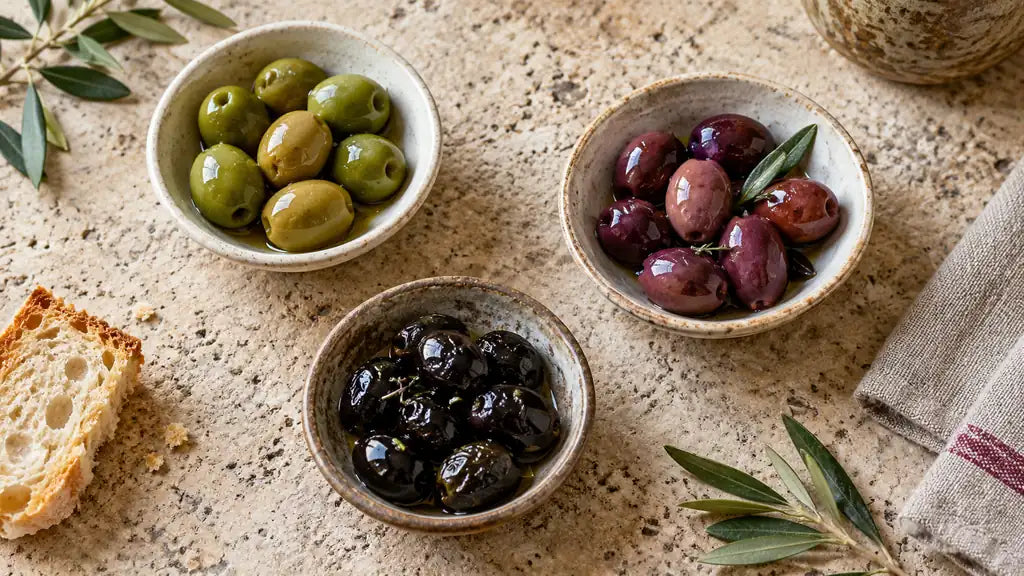
A firm olive, halved, gives a precise bite in a salad. Softer flesh can become a paste for bread or blend into a sauce. Even before learning every variety, these differences are a good place to start choosing: texture, processing and saltiness say a lot about how to use them in the kitchen and help you buy a package suited to the dishes you usually make.
Colour only tells part of the story. Not all green olives taste the same, just as not all black ones turn out soft or delicate. Table preparations are the result of both the raw material and the processing it's been given. Knowing this makes even a simple aperitivo more interesting: you can understand what you're tasting, choose the oil that goes with it, and then use the same olive in different recipes.
From the fruit on the tree to the olive you eat
The olive is the fruit of the olive tree and is made up of skin, flesh and pit. Freshly picked, it contains bitter substances, including oleuropein, and isn't normally eaten the way the ready-to-eat product from a jar is. Before it can be eaten, it goes through processing that tones down the bitterness and shapes its final characteristics. So when you find fresh fruit at the market, it's important to know whether it's already meant for the table or still needs processing.
A quick marinade in oil and herbs doesn't replace the treatment raw fruit needs. The preparations described here for pasta, crostini and salads all start from olives that are already ready to eat. For a direct purchase, asking the grower what the fruit is for and how to store it avoids confusion more than origin information alone. A fruit that looks lovely can be a good raw material without yet being ready for dinner.
A slightly bitter aftertaste in processed olives, on the other hand, can be part of the product's character and work well in pairings. There's no need to always chase the sweetest taste. On vegetables like cooked onion or pumpkin, a more pronounced note can find an interesting balance. That's what tasting is for, once the product is intact and correctly stored: understanding the olive's place in the recipe, separate from the checks needed when working with a home preserve.
What green and black actually tell you
Colour changes with ripeness, but in processed olives, treatment plays a role too. A photo of the contents alone doesn't reconstruct the whole production path. The distinction between green, turning and black remains a general guide, to be completed with the sales name and ingredients. A product can have a sour note, a marked saltiness, or added flavourings that change the experience even when the colour looks similar to a package you already know.
If you want to repeat a recipe that worked well, it's worth remembering the processing method used, not just the colour. "Pitted black olives in brine" describes a choice more precisely than just "black olives." If the previous package also contained garlic or herbs, those ingredients were already part of the seasoning. Switching products can therefore need a small adjustment, without the new package being any less suitable overall: it might simply be meant for a different use.
The skin, too, should be read in context. A wrinkled look can be typical of dry processing and isn't necessarily a defect compared with a smooth surface. Any actual spoilage or compromised seals are a separate matter and mean you should avoid eating the product. To get to know an unfamiliar process, it helps to ask what the product is supposed to look like, so you can examine the package against a concrete reference rather than judging it purely out of habit.

Cultivars and what they're suited to
Cultivar means a variety of olive tree. Among the better-known Italian names are Taggiasca, Nocellara del Belice, Ascolana and Cerignola olives. For table use, what matters is the flesh, the size and the ratio to the pit, along with the skin and texture. A meaty fruit can be pleasant served whole; for a stuffed olive, how easily the pit separates and how workable the flesh is also matter.
Table and oil varieties don't always form two completely separate groups. Some varieties, such as Itrana, suit both purposes. The profile of the oil produced from a given cultivar, though, doesn't automatically describe the olive processed in brine or with other treatments. These are different products. When you're exploring a particular variety, it's worth asking for information relevant to the use you're after, rather than transferring what you've read about the bottle onto the fruit you're eating.
The name remains a starting point and doesn't replace tasting the finished product. The same raw material can follow different processes and reach the table with different characteristics. Even a protected name should be read for its own specific meaning. For buyers, a simple question like "what texture should I expect on the plate" helps connect this information to real cooking, turning curiosity about varieties into something useful for your next shop.
How bitterness is toned down
Debittering covers the processes that reduce or transform the olive's initial bitterness. Depending on the product, these can include washing, alkaline treatments, brining and fermentation. These different paths all contribute to the result and aren't equivalent. The producer can explain which one was followed and what taste to expect: an answer like that describes the process far better than a generic nod to tradition, or the word "artisan" used with no further detail.
A less bitter olive isn't automatically a better one. A delicate taste can work well in a simple salad, while a more pronounced preparation can go nicely with cooked tomato. The choice depends on the pairing and on preference. If a new product tastes very intense eaten on its own, you can try a small cut-up amount in the dish you have in mind. Spreading it among the other ingredients changes the result and helps you work out what quantity suits you.
To correct the taste, it's best not to improvise long soaks on the whole package. Ready-to-eat olives come with their own instructions, and changing them without guidance also makes it harder to manage your stock. A product that doesn't match your preferences can point you towards a different process on your next purchase. In the meantime, cutting and pairing let you get to know it better, without trying to transform the whole jar's contents at home.
Whole, pitted, or as a paste
Whole olives are easy to serve when there's a way to deal with the pits at the table. Pitted ones make pasta, salads and fillings easier. Having the pit doesn't on its own guarantee quality, and its absence doesn't make the product some kind of compromise. These are simply different formats, to be chosen according to what you're making. If you remove the pit at home, an olive pitter or a steady utensil on the chopping board helps you work the flesh.
Before chopping or blending, check for any fragments, even in packages bought already pitted. Olio Pace's pitted black olives in brine are convenient for these uses; the product page identifies a preparation made from Leccino olives. The cut can then change depending on the dish: halved to show off the fruit, small pieces to spread among pulses, chopped to bind into a seasoning.
A paste is already a preparation meant for spreading or blending in. It should be read on the ingredients list, because it can contain oil and other components and doesn't automatically correspond to the same quantity as whole olives. Olio Pace's black olive paste is a ready-made solution for bread, worth trying in a thin layer before adding any more salt or oil. The base's own taste may already be enough to go with tomato and grilled vegetables.

Buying with the recipe in mind
For a jar, it's worth checking the sales name, any seasonings present and the drained weight. The drained weight shows the quantity available once separated from the liquid, while net weight covers everything in the package. Price should be compared on the same basis. With whole olives, there's also the pit, which isn't eaten: this further difference makes it less useful to compare two figures without checking which product and quantity they actually refer to.
The format should match the meals you have in mind and the instructions for after opening. A generous package is convenient when you use it regularly, less so when it stays open for just a few occasional tastes. For loose products, you can ask the seller for the same information and keep a note of it. For an aperitivo, it's enough to take out the portion you need; for a pasta dish, it's practical to prepare the drained olives on the chopping board before turning your attention to the pan.
On taste, a simple comparison can look separately at texture and at what lingers after tasting. Firm or soft flesh, saltiness and bitterness all help you decide how to use it, without chasing some absolute ranking. If there's already a sour note present, lemon isn't necessarily needed. For any oil added fresh, you can choose among our extra virgin olive oils, starting with a little and tasting the finished dish. Brine and generous seasoning aren't shortcuts for improving every dish.
A green olive paste for four crostini
As a rough guide for four small crostini, you can use about 60 grams of drained, pitted green olives, a tablespoon of extra virgin and a little parsley. Untreated lemon zest can add fragrance. Chop the olives with a knife and mix them with the seasoning, leaving an irregular texture. For a more sour note, only assess a little juice after tasting, because the product might already have its own.
Crunchy bread makes a pleasant contrast with the chopped mixture, with no need to turn it into a smooth paste. A thin layer lets you work out how much saltiness each bite carries and whether the tomato or vegetable accompanying the crostino needs more seasoning. This mixture is meant for immediate consumption. If you'd rather have a ready-to-spread version, the paste has a different base and should be dosed by tasting in the same way.
Chickpea and fennel salad
For two people, to be adjusted to the meal, you can consider about 240 grams of cooked, drained chickpeas, a small fennel bulb and 60 grams of drained, pitted olives. You'll also need a tablespoon of extra virgin, parsley and lemon to taste. Slice the fennel thinly and halve the olives; then combine them in a bowl with the chickpeas, prepared according to the package if they're already cooked.
Add the seasoning gradually and check the salt at the end. If the olives are intense, part of them can be added after the first taste, rather than correcting the whole salad at once. For a different result, you can use tomato instead of part of the fennel, or add a few crunchy leaves. There's no need to pour the brine into the bowl: cutting and mixing already spread the taste through and give you more control over liquid and saltiness.

In pasta and on roasted vegetables
For a tomato pasta for two people, a rough guide can be 160 to 180 grams of pasta, 250 grams of peeled tomatoes, 50 to 60 grams of drained olives and a tablespoon of oil. Garlic is optional. Prepare the sauce first over moderate heat, then add the cut olives towards the end. The pasta can finish in the sauce with a little pasta water, tasted before you correct the salt.
A tray of roasted vegetables offers another use. For two side dishes, you can use about 500 grams of courgettes, peppers and onion combined, with 50 grams of olives and one or two tablespoons of oil. Cut the vegetables evenly, spread them out without crowding them, and roast at roughly 190 to 200 degrees, checking tenderness and browning according to your oven. The olives can go in for the last few minutes, warming through without staying in the heat for longer than necessary.
The amount of vegetables on the tray affects the result: if they're too crowded, it's harder to get the browning you're after. You can split the batch between two trays, depending on the equipment you have. Here too, the olives should be dosed with the whole dish in mind. Before adding salt or other ingredients, a forkful with vegetable and olive together lets you judge the result; a very salty olive might already have given the side dish the character you wanted.
Storage and preparations that need to stay separate
Timing and temperature after opening depend on the product. Olives in brine, stuffed or seasoned don't automatically keep for the same length of time. Take out the portion with a clean utensil, then close the container and store it as instructed. When the original liquid is part of the product, there's no need to drain the stock or replace it with an improvised brine. Olives that have already been on plates or mixed with other ingredients should be kept separate from the ones you're storing.
A fresh mixture with oil, herbs or garlic isn't a pantry preserve. Oil and vacuum sealing don't sterilise the contents; starting from raw fruit to make a real preserve needs complete, validated procedures. A suspect preparation shouldn't be tasted to check it. Once this distinction is clear, the rest can stay everyday cooking: choosing a process you enjoy, changing the cut to suit the recipe, and tasting before adding other salty ingredients.
Frequently asked questions
Are freshly picked olives already ready for an aperitivo?
They normally need treatment to tone down the bitterness. Ask whether the product is ready to eat, especially at a market or from a grower; a quick marinade doesn't replace proper processing.
Does colour let me predict the taste?
Only partly. In processed olives, variety, treatment and seasonings matter too. Green and black olives can have different textures and saltiness even within the same colour.
What does cultivar mean?
It's the olive tree variety. It helps you get to know the raw material, but on its own it doesn't describe the taste of the finished product, which also depends on processing.
Can one variety serve both oil and table olives?
Yes, some have a dual purpose, such as Itrana. The taste of the oil obtained, though, shouldn't automatically be attributed to the fruit processed for the table.
Does less bitter mean higher quality?
Not automatically. A delicate or a more pronounced taste can both suit different recipes. The choice depends on the preparation you want and your personal preferences.
Are pitted olives suited to pasta?
They're convenient to cut and distribute. Still check for any pit fragments before use, especially if you plan to chop or blend them.
How do I compare the quantity in different packages?
Look at the drained weight for the content separated from the liquid, and use the same basis when comparing prices. With whole olives, also factor in the uneaten pit.
When should I add olives to roasted vegetables?
They can go in towards the end, once the vegetables have nearly reached the texture you want. That way they warm through without sitting unnecessarily long in the oven.
Can I use the same after-opening instructions for all of them?
No. Processes and formulations can vary. Follow the instructions for the product you bought, and ask for specific guidance for loose products.
Can a mixture of chopped olives, garlic and oil be kept in the pantry?
It's a fresh preparation meant for immediate use, not a stable preserve. Oil and vacuum sealing don't sterilise it; real preserves need specific, validated procedures.
Sources consulted
International Olive Council: table olives
Masaf: overview of the table olive sector
Accademia dei Georgofili: Itrana, a very special cultivar
ISS: guidelines for preparing home food preserves
Olio Pace: extra virgin olive oils category


