
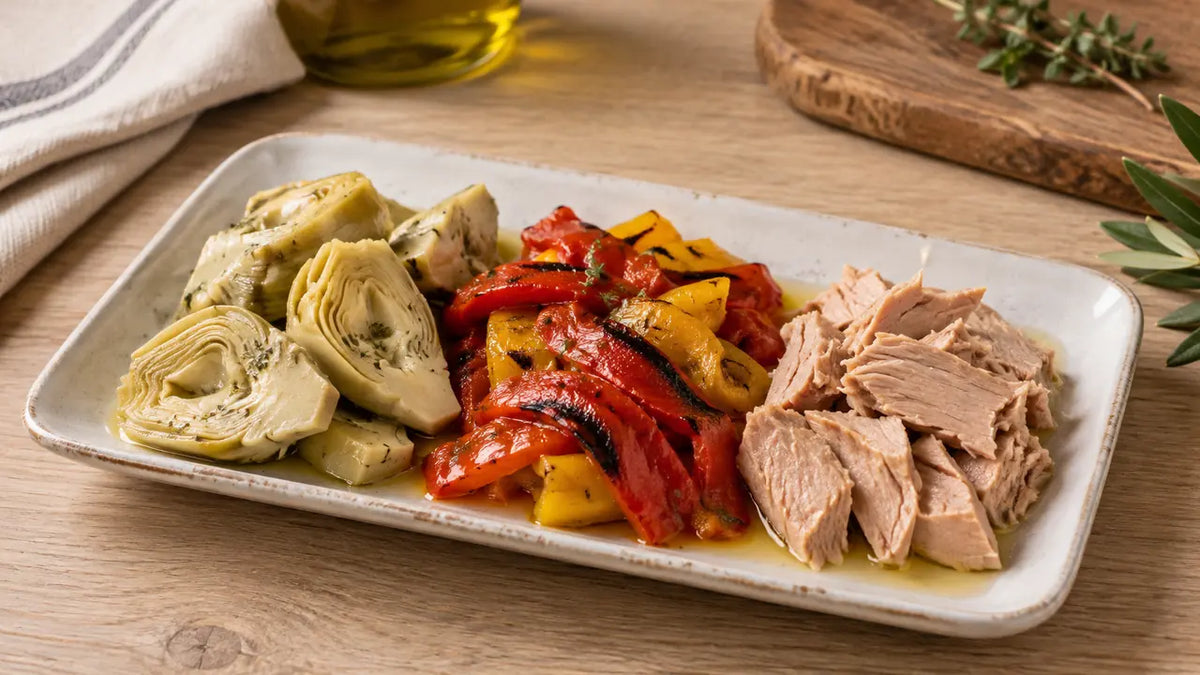
One small artichoke on toasted bread can be enough to start lunch. A few peppers among the pulses change an everyday salad, while a tuna fillet finds its place on warm potatoes. Foods preserved in oil are useful when you already know how you'll use them: you open a jar for a specific recipe and know what to do with the rest, instead of piling up different jars that just sit in the fridge.
When choosing, the type of oil is only one of the elements. What matters is the food itself, how it's cut, and the seasonings already present, along with the drained weight and the instructions for after opening. The wording "in oil" actually describes how the product is presented, without on its own telling you about the whole process. In the kitchen, what matters is the taste that reaches the plate; for the preserve's safety, on the other hand, you need to consider the whole preparation, rather than giving the oil the job of sterilising the contents.
In oil, in vinegar and in brine
"Sottolio" and "sott'olio" are both spellings indicating that the food is kept in oil. In a vinegar preserve, the defining liquid is vinegar; in brine, a solution of water and salt is used. At the table, they can serve different purposes. A vinegar preserve brings a sour contrast, a brined preparation often offers a salty note, while oil binds the flavours together and gives the seasoning a softer feel. The other ingredients round off the result each time.
The presence of oil doesn't rule vinegar out of the process. A vegetable in oil can therefore still have a noticeable sour note, worth knowing before pairing it with lemon or other ingredients. If you want a delicate little artichoke, the product's composition and its actual taste are more useful than an expectation based on the name alone. Even two preserves of the same vegetable can differ quite a bit in texture, flavourings and saltiness, while both still being "in oil."
For an already seasoned focaccia, a more sour-tasting vegetable can work well; on plain pulses, the oil-preserved food can also bring part of the seasoning you need. Olives in brine have a different presence and need a dose suited to their own saltiness. Keeping these uses in mind stops you automatically swapping one product for another. The recipe can still work, but its balance will need tasting again, especially before adding salt.
The ingredients that end up in the dish
The label first makes clear which food you're buying and with which oil. Extra virgin, olive oil and seed oil are different ingredients, identified by the actual wording. Olive trees drawn on the packaging and references to a mill don't replace reading it. A clear list lets you choose based on the taste you're after and understand whether the jar's seasoning suits the dish you already have in mind for lunch.
Then come salt, vinegar and any herbs or spices. Garlic and chilli, for instance, reach the plate together with the vegetable. A very fragrant product can be ready for a starter on its own, while a simpler base leaves room when you want to make a pasta dish. To avoid repeating additions, it's enough to taste the preserve before seasoning the other ingredients: it might already have the fragrance you were about to add a second time.
In stuffed preparations, it's important to know about allergens too. A chilli pepper stuffed with fish isn't the same as a plain vegetable, and it needs to be identified on a shared platter. The heat can suggest a separate portion for anyone who enjoys it. Nutritional figures, where given, should be read checking whether they refer to the product as sold or drained. Comparing two packages needs the same basis, rather than looking for a numerical measure of salt and oil in the taste alone.

How much food is actually in the jar
Net weight covers the whole contents, including the liquid present. Drained weight, where stated, helps you understand how much solid food will actually be available for your portions. A bulky-looking jar doesn't necessarily hold more artichokes or more fish than one that looks small. If you're buying for a shared starter or a filling, this information lets you plan the quantity far more precisely than a visual impression would.
To compare the cost of the usable food, you can divide the price by the drained weight, expressed in the same unit. The comparison stays most useful between similar products: whole fillets and small pieces, or artichoke hearts and trimmings, can play different roles on the plate. The quantitative figure clarifies the cost without replacing the culinary choice. If everything's going to be chopped up anyway, the visual neatness of the contents matters less than it would for a whole, intact presentation.
The format is also worth deciding with after-opening handling in mind. A large package can suit a big table; a small one, a few crostini. The covering oil might find a use in the dish, but it shouldn't be counted as if it were a fresh bottle of oil to keep for any purpose. It's been in contact with the food and carries its taste and components: how useful it is depends on the recipe and the product's condition.
Cut and texture guide the pairing
For a starter, artichoke hearts, pepper strips and other cuts you can pick up comfortably are practical. In a sauce or a filling, small pieces spread through easily. A tender vegetable goes well with crunchy bread; a base of potatoes or pulses, on the other hand, can gain contrast from fresh fennel. There's no need to always add another preserve to make the dish less uniform: the fresh component has a role too.
Tuna and anchovies share the "in oil" presentation but not their role in the kitchen. Tuna can stay the centre of the dish, while anchovies often give character to the seasoning. To serve visible pieces over vegetables or grains, you can consider tuna fillets in olive oil. Prepare the base first and lay the fish on top at the end, so the shape chosen in the package stays recognisable in the portion too.
For a filling, you can instead break up the fillet with a fork, to the texture you want. Before adding more liquid, it's worth seeing how much seasoning is left on the drained fish or vegetable. Bread, in particular, can turn too soggy if it takes on uncontrolled amounts of oil and liquid from the other ingredients. A small taste put together the same way as the finished dish lets you work out whether you really need more additions.

How to use the covering oil
When the product is intact and correctly handled, some of the oil can contribute to the dish you're making right then. Tuna's own oil carries the fish's taste; oil from garlic-flavoured peppers brings that aroma along too. The choice therefore depends on the pairing, with no obligation to use all of it. A crostino might already have enough on the vegetable's own surface, while lightly seasoned potatoes can take on a small extra amount.
If you'd rather choose a finishing oil separately, our extra virgin olive oils let you compare profiles and uses. You can test it on a single portion before seasoning the whole platter. With a delicate preserve, the oil might stand out; garlic and chilli already present will change how it's perceived. Adding a little and tasting keeps your options open, rather than ending up straight away with an overly seasoned dish.
Oil left over in jars shouldn't be pooled together as if it were a new stock, nor used to start other preserves. For oil to be discarded, follow local guidance for collecting used cooking oil, and avoid pouring it down the drain. Cutting down on waste starts with shopping: choosing a format that matches the recipes you have planned makes it easier to use the food well and leaves you with less liquid to deal with at the end.
A starter with vegetables and toasted bread
For four people, a rough base can be made up of about 200 grams in total of drained oil-preserved vegetables, 250 grams of fennel and four slices of bread. You can choose one star vegetable and a fresh accompaniment, without opening lots of similar jars. Slice the fennel thinly, cut the oil-preserved food into bite-sized pieces, and toast the bread until it's dry and pleasantly crisp on the surface.
A pan, a toaster and an oven all need different timings, so it's worth watching the bread rather than following a fixed number of minutes. The fennel can be arranged alongside the vegetables, keeping the bread separate until serving. If you're using small artichokes and peppers, the first can give texture and the second a sweeter or more aromatic note, depending on how they've been prepared. Check the salt only after tasting a full mouthful.
With a sour-tasting vegetable, you might not need lemon at all. Any extra drizzle of oil can be kept for the fresh component, bearing in mind what the oil-preserved food already holds. Aged cheeses, anchovies and cured meats shouldn't all arrive at once just to make the starter feel complete: they could end up masking the very preserve you chose. You can serve a first amount and add more if needed, keeping the ingredients recognisable and leaving room for the other courses planned for the meal.
Pasta with artichokes and chickpeas
An open jar of artichokes, still usable according to the label, can become a pasta seasoning. For two people, you can start with 160 grams of pasta, 120 grams of drained artichokes and 150 grams of cooked chickpeas. Cut the artichokes into bite-sized pieces, while the chickpeas warm through in the pan with a little water. The vegetable goes in towards the end, to keep a recognisable texture and avoid working it more than necessary.
The cooked pasta goes into the pan and is tossed together with a little pasta water added gradually. Chopped parsley can round off the recipe, and the salt should be decided after bringing the ingredients together. The seasoning you're after is soft, with no need to automatically pour in more oil: some may already be sitting on the artichokes. If the product already contains garlic or herbs, those fragrances are already there and should be factored in before preparing any more.

Couscous with mushrooms, peppers and courgette
For two people, a rough suggestion can be 120 grams of dried couscous, 90 grams of drained oil-preserved mushrooms, 70 grams of oil-preserved peppers and one courgette. Prepare the grain following the water and resting time on the package. Meanwhile, cut the courgette and cook it in a pan to the texture you prefer. Fluff the ready base with a fork before adding the other ingredients.
Cut the mushrooms and peppers into bite-sized pieces and combine them with the courgette. Judge the oil only after mixing, bearing in mind what's left on the oil-preserved foods. If the couscous looks dry, first check the hydration stated on the package: more seasoning doesn't necessarily fix that step. A very aromatic preserve may already give the taste you're after. To vary the dish, the fresh component can change depending on what you have on hand.
Fennel and carrot can add crunch, while salad tomatoes bring a juicier element. Cooked vegetables offer yet another texture. The oil-preserved food stays the ingredient that defines the dish, and the accompaniments change how it's used without calling for a fresh stock of preserves. If you add cheese or fish too, that's the moment to reassess the saltiness before serving, tasting the ingredients once they're all together.
Care after opening
There's no single shelf life that applies to every open jar of preserved food. Before using them, read the instructions on timing and refrigeration, keep the label, and, if it helps, note the opening date. Take out the contents with a clean utensil, and keep anything that's already been on a plate separate from the stock. Keeping the jar visible in the fridge can help you plan its use, rather than relying on memory once you've opened several.
When the producer requires the food to stay covered in oil, follow that instruction. Topping it up, though, doesn't reset the time that's passed, and it doesn't replace the refrigeration called for. Closing the lid again doesn't restore the sealed product's original conditions either. A salad with tuna or a couscous with vegetables then become their own perishable preparations, needing hygiene and prompt refrigeration even during transport for a lunch away from home.
A meal recipe isn't a home preserve
Seasoning vegetables for immediate use and packaging them for the pantry call for different procedures. Oil and vacuum sealing don't sterilise the contents. Home vegetable preserves need complete, validated instructions applicable to the product; ordinary meat and fish preserves are advised against by health authorities. Washing the jar or adding vinegar by eye isn't enough. Even a traditional recipe, on its own, doesn't prove that every necessary parameter has been checked.
For a jar received as a gift, the date doesn't reconstruct the process: you need reliable information on the procedure and storage. A suspect preserve shouldn't be tasted to check it, because normal appearance and taste don't offer sufficient proof. For packaged products, check integrity, batch and instructions, and avoid eating them if anything looks off. With these distinctions clear, choosing an oil-preserved food can go back to being a kitchen decision: which vegetable you like, how to serve it, and which recipe will let you make good use of the jar.
Frequently asked questions
Are "sottolio" and "sott'olio" both correct spellings?
Both indicate a food presented in oil. The wording alone doesn't describe the whole process and needs to be completed with the product's ingredients and instructions.
Can an oil-preserved food also contain vinegar?
Yes. The presence of oil doesn't rule out vinegar or other processing steps. A vegetable in oil can therefore have a sour note worth factoring into your pairings.
Which weight should I use to plan portions?
Drained weight, where stated, helps you assess the solid part separated from the liquid. Net weight, on the other hand, covers the whole contents.
Can I tell the type of oil from the illustrated packaging?
It needs to be read on the ingredients list. Extra virgin, olive oil and seed oil are different; images and references to tradition don't replace the actual wording.
Can the covering oil go into the dish?
Some of it can contribute to the seasoning of the moment, if the product is intact and correctly stored. Consider the flavourings it carries and how much oil is already on the food.
Does topping up automatically extend the jar's shelf life?
No. Follow the instructions if they call for keeping the contents covered, without resetting the time since opening or replacing the refrigeration required.
When should I add oil-preserved artichokes to pasta?
Towards the end of cooking, to bring them together without working them too much. Adjust the water and seasoning bearing in mind what the artichokes retain after draining.
How do I avoid too much oil in couscous with oil-preserved foods?
Prepare the grain first according to the package, then mix in the drained ingredients. Judge the seasoning only at the end, telling a hydration issue apart from an actual need for more oil.
Is the date enough to assess a home-made jar received as a gift?
It doesn't reconstruct the procedure. Ask for reliable information on processing and storage, and don't taste suspect contents to decide whether they're safe.
Do oil and vacuum sealing make a preserve stable?
They don't sterilise the food. Safety depends on the complete procedure; home preserves need validated instructions relevant to the specific product.
Sources consulted
ISS — Guidelines for correctly preparing home food preserves


